

VEHICLE ONE — ICE
Northern configuration
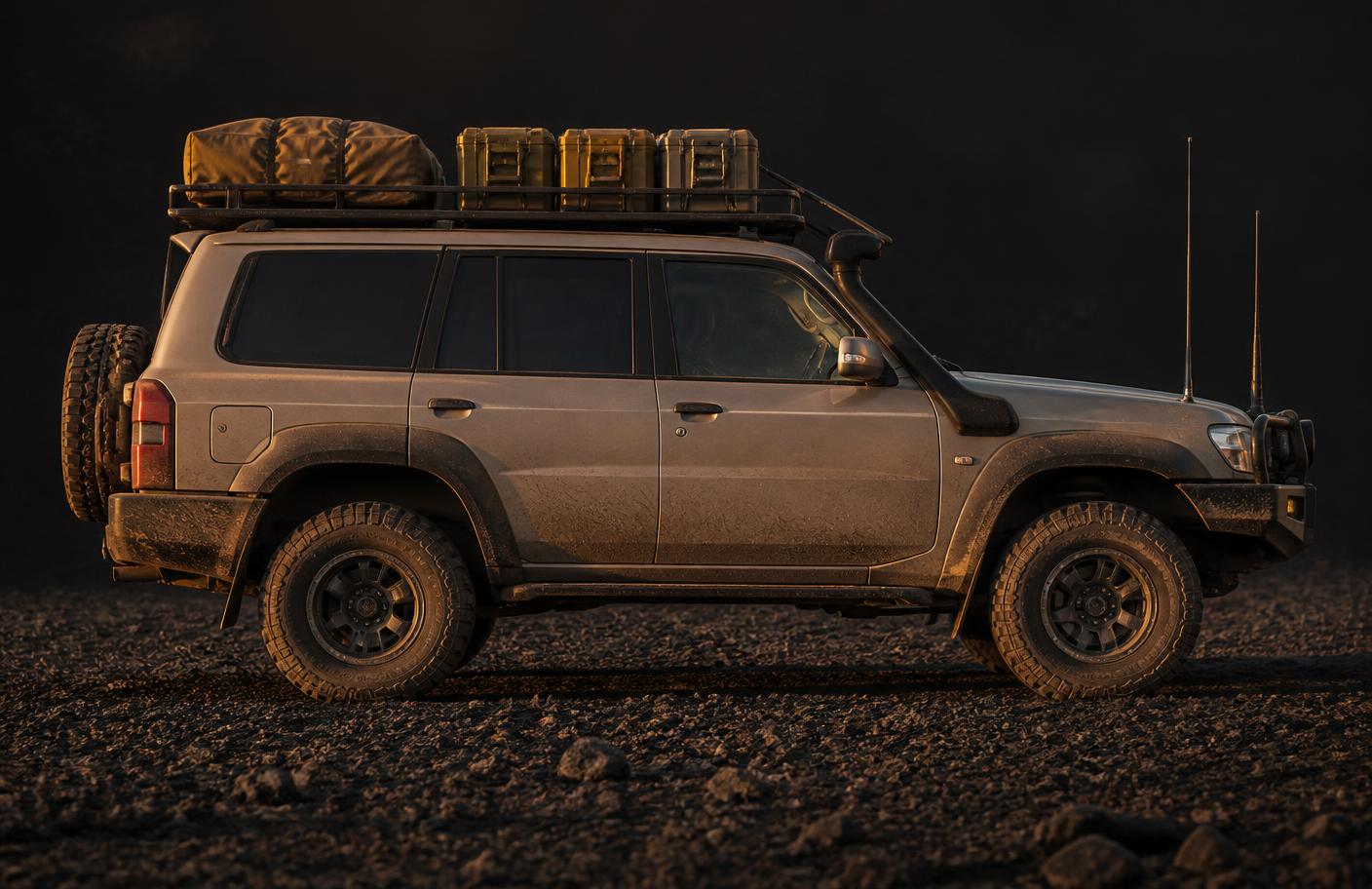
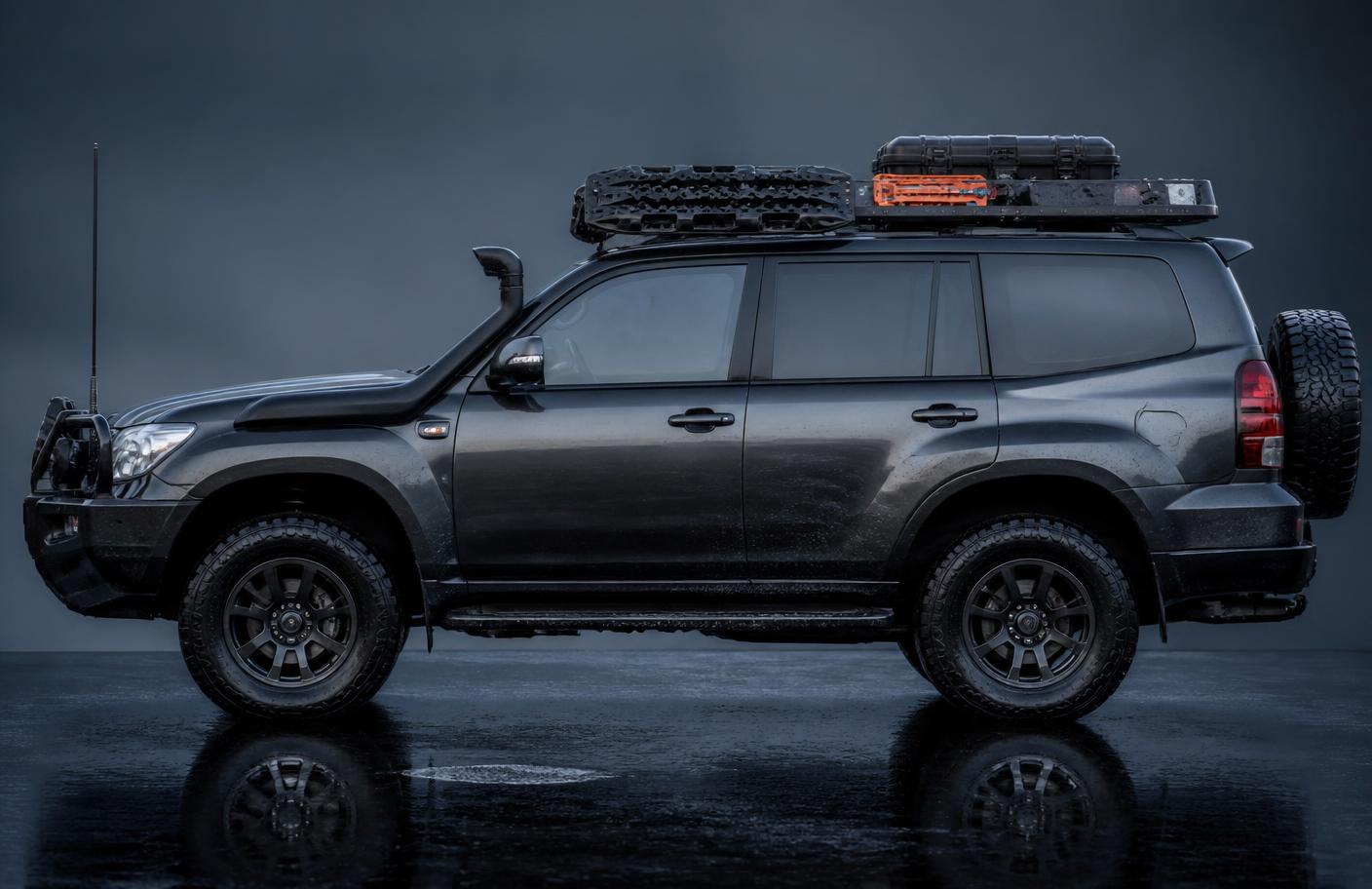
Configured for the cold half of the continent: winter starts, deep gravel, long service gaps and low-light filming.
- Target requirement
- Body-on-frame candidate platform, selection open
- Evaluation criteria
- Cold-start behaviour, service network across 17 route countries, fuel compatibility, parts availability, field repairability and payload headroom.
- Current status
- Platform selection in progress — no manufacturer has been chosen or approached exclusively.
- Why it matters on the route
- The same vehicle has to work in Arctic winter, Central American humidity, Andean altitude and Patagonian wind, thousands of kilometres from a dealer.
- Target requirement
- Target 900+ km operating range with auxiliary capacity
- Evaluation criteria
- Verified fuel-point spacing, auxiliary tank options, altitude power loss, fuel-quality tolerance and consumption under full expedition payload.
- Current status
- Under evaluation — range targets are engineering requirements, not measured results.
- Why it matters on the route
- Several planned stages have long gaps between reliable fuel, and altitude reduces available power exactly where the terrain is hardest.
- Target requirement
- All-terrain, load-rated, severe-snow capable set
- Evaluation criteria
- Load rating at full payload, severe-snow capability, cut and heat resistance, availability of replacements on the continent.
- Current status
- Tire programme open — no tire partner is confirmed.
- Why it matters on the route
- One tire specification must survive ice, sharp volcanic rock, desert heat and thousands of kilometres of gravel.
- Target requirement
- Long-travel expedition-rated with payload calibration
- Evaluation criteria
- Payload calibration, damping durability over corrugation, spare-part simplicity and ride quality on long transit days.
- Current status
- Under evaluation.
- Why it matters on the route
- Corrugated gravel destroys under-specified suspension faster than any single obstacle on the route.
- Target requirement
- Full skid plates, tank and transfer-case guards
- Evaluation criteria
- Coverage of tanks, transfer case and harness routing, weight penalty, mud clearance and repairability in the field.
- Current status
- Under evaluation.
- Why it matters on the route
- A single punctured tank or crushed harness in a remote section becomes a multi-day recovery.
- Target requirement
- Winch, kinetic ropes, rated points, traction boards
- Evaluation criteria
- Rated recovery points, winch capacity against vehicle weight, ropes and boards, and crew training standards.
- Current status
- Under evaluation — recovery partner category open.
- Why it matters on the route
- Two vehicles travelling together must be able to recover each other without outside help.
- Target requirement
- Dual battery with solar and inverter for media loads
- Evaluation criteria
- Media load per filming day, solar yield at different latitudes, cold-weather battery behaviour and safe charging while driving.
- Current status
- Under evaluation — energy partner category open.
- Why it matters on the route
- Cameras, editing, satellite uplink and cabin systems all draw power on days where there is no grid at all.
- Target requirement
- Satellite plus terrestrial, availability varies by country
- Evaluation criteria
- Coverage per country, legality of transmission equipment, terminal power draw, uplink bandwidth and redundancy.
- Current status
- In development — no connectivity provider is confirmed.
- Why it matters on the route
- Live windows only exist where a signal is legally available; everything else becomes a recorded field report.
- Target requirement
- Cabin, exterior, drone and gimbal packages
- Evaluation criteria
- Cabin and exterior mounting, dust and vibration sealing, low-light performance, drone permit rules and data offload workflow.
- Current status
- Under evaluation — imaging partner category open.
- Why it matters on the route
- The expedition is also a production: if the capture chain fails, the journey happens without a story.
- Target requirement
- Expedition trauma kit with remote medical protocol
- Evaluation criteria
- Remote trauma capability, altitude protocol, cold-injury protocol, medication storage and telemedicine access.
- Current status
- In development with the safety and medical lead role in selection.
- Why it matters on the route
- Evacuation times on several stages are measured in hours or days, not minutes.
- Target requirement
- Onboard tank plus filtration
- Evaluation criteria
- Onboard tank volume, filtration standard, freeze protection and refill planning per stage.
- Current status
- Under evaluation.
- Why it matters on the route
- Desert and altitude stages have long sections without any safe water source.
- Target requirement
- Range planning around verified fuel points
- Evaluation criteria
- Range planning against verified fuel points, auxiliary capacity, fuel-quality filtering and safe carriage regulations per country.
- Current status
- Route research in progress.
- Why it matters on the route
- Fuel planning, not top speed, decides whether a remote stage is possible at all.
- Target requirement
- Critical spares matched to service-network analysis
- Evaluation criteria
- Wear-item duplication across both vehicles, service-network analysis and customs treatment of shipped parts.
- Current status
- Under evaluation.
- Why it matters on the route
- Carrying the right ten kilograms of parts can be the difference between a delay and an abandoned stage.
- Target requirement
- Vehicle-to-vehicle radio and satellite messaging
- Evaluation criteria
- Vehicle-to-vehicle radio range, satellite messaging, per-country licensing of radio equipment and convoy discipline procedures.
- Current status
- In development.
- Why it matters on the route
- Guest vehicles join the convoy in each country, and convoy safety depends on everyone hearing the same instruction.
- Target requirement
- Heaters, insulation, winter fluids, block heating
- Evaluation criteria
- Cold-start aids, insulation, winter fluids, block heating, cabin heat and battery management below freezing.
- Current status
- Under evaluation.
- Why it matters on the route
- The expedition begins in Arctic conditions, where a failed start is a safety event, not an inconvenience.
- Target requirement
- Cooling headroom and altitude-tuned intake
- Evaluation criteria
- Cooling headroom, dust sealing, intake and turbo behaviour at altitude, air-conditioning load and crew heat management.
- Current status
- Under evaluation.
- Why it matters on the route
- High-altitude desert stages combine thin air, dust and heat in a way that exposes every cooling compromise.